10,000+
Athletes Trained
No lifeless PDFs. No recycled bodybuilding programs. Real coaches who've been the small kid, figured it out, and built the exact system they wish they'd had at 18.
The smallest kid in the room who got tired of being told his ceiling was lower than everyone else's.
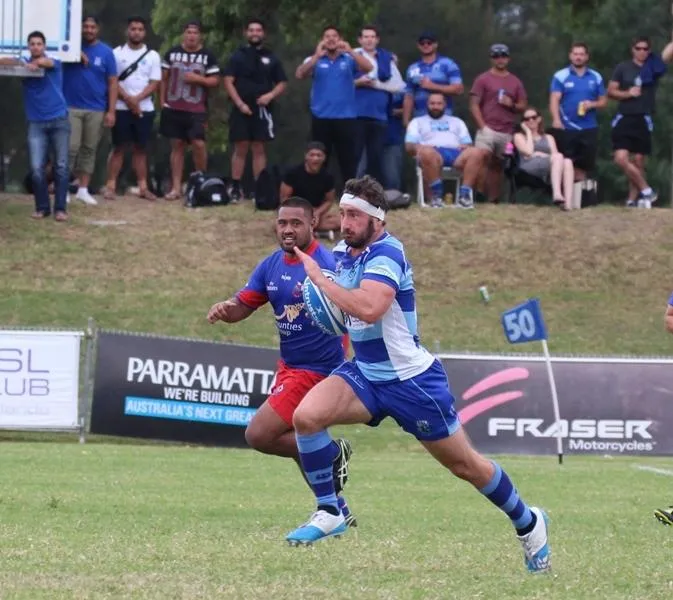
Two older brothers. Backyard rugby every afternoon. No fear — but never first picked. When Pat got to a competitive level he did what every coach told him: bulk up, get heavy, train hard. Five, six, seven days a week. High reps, heavy volume, chase the pump.
By 20 it wasn't adding up. He was training harder than anyone he knew and getting bigger in the mirror — but it wasn't showing up on the field.
So he stopped following programs and started studying them. Why does a muscle actually grow? Why does gym strength transfer to the field — or not? Why do some players get massive and stay exactly the same on the field, while others train half as much and dominate?
What he found changed everything. Almost every program handed to rugby players was built on bodybuilding principles — designed for people using steroids who do nothing but recover. High volume. Train to failure. Soreness as feedback. It was never designed for a natural athlete who has to perform on the weekend.
He rebuilt his training from scratch. Lower volume. Heavier weights. Smarter exercise selection. Less damage, more tension — built around how force actually transfers to rugby movements, not how a bodybuilder gets bigger. The results on the field were immediate.
Still told he was too small. 175cm. 85kg. Won't last. He played 1st grade Shute Shield anyway.
Not because his genetics changed. Because he finally understood how to train.
Pat became a PT almost by accident — just something to do after school. Rugby players started coming to him, not because he marketed himself, but because they saw what he looked like on the field and wanted to know what he was doing in the gym. That was 16 years ago.
Since then he's coached over 10,000 athletes — park players, school kids, rep players, professionals, Olympians. RDC was built on the back of parents and players seeing the results and coming to him for help.
At 26 came a second realisation. The power cleans, the trap bar jumps, the push press — the whole standard rugby S&C menu. He looked at the data properly and compared it against players who instead got seriously strong at one end of the force-velocity curve and seriously fast at the other. The power zone had no specific adaptations. Players who dropped it and trained the ends got more powerful. Every time.
He's still obsessed. He still tests everything. He still changes what he does when the evidence says he's wrong. The programs he writes now are the ones he wishes he'd had at 18 — the smallest kid on the field who just wanted to be a beast.
Book a free 15-minute call with Pat. No pressure — just a chat about your goals and the fastest way to get there.
Book Your Free CallAussie 7s player. One of the very first RDC clients — now on the coaching team.
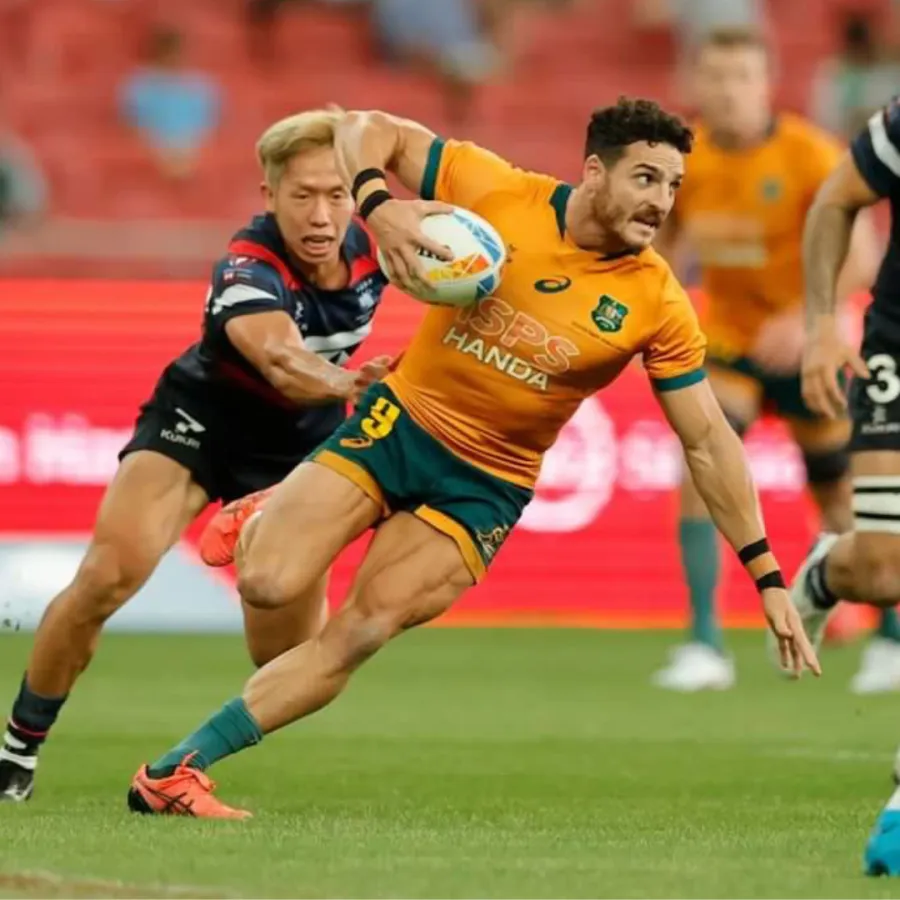
Matt was one of the very first RDC clients who wanted better results. He was told he was too small to make it professionally, and that his pass was too hard. His biggest asset was his speed — so he wanted to gain muscle without getting slow.
Over 2–3 years he went from 70kg to 82kg, lean and fast — and he actually got quicker. That helped him get selected for Australia in the 7s.
Today Matt helps RDC coach players in person and runs the speed and fitness programming, making sure every player is ready for the field.
Player after player, transformation after transformation — check out the results wall.
View the Results