Rugby Development Coach — Fuel System
Rugby Development Coach

Rugby Development Coach

Fuel System — Build Your Plan

🏉

Get Your Free Rugby Fuel Plan
& How To Train For Your Goal

Pat will build you a personalised nutrition plan — macros, meals and a training match specific to your goal. Completely free.

✓ Build Muscle ✓ Lose Fat ✓ Gain Mass Without Losing Speed ✓ Downloadable PDF

🔒 No spam. Your details go to the RDC coaching team only.
Check your junk folder — your plan will be emailed to you.


Your Fuel Plan

RDC Method
Building your personalised plan...

Pick any meal and get the full breakdown — ingredients, prep steps, cost in AUD, best brands to buy, and how to batch-prep it cheaply.
Costing and building your meal...

Pre-Workout & Game Day — pomegranate juice, OJ & honey, game day timing protocol and more.
RDC Method

Training For Rugby — What Actually Works

Short, sharp and direct. The principles behind every RDC program and why they convert to the field.

The one thing most players get wrong

They train hard but not smart. They follow generic gym programs, ignore the muscles that matter for rugby, and wonder why their strength does not show up on the field. This is how we fix that.

💪
How Muscle Actually Grows
The science, simplified

Think of a muscle not as one thing but as 100,000s of individual fibres. The more effort you put into an exercise, the more fibres you recruit. For a fibre to grow, it needs to be activated and experience tension. No activation, no growth.

Key insight: The more muscles involved in an exercise, the more coordination it demands and the fewer fibres you activate. This is why for the muscles that matter most in rugby — glutes, hamstrings, quads, hip flexors, adductors, core — we use stable isolation exercises for maximum recruitment.
  • Progress by adding weight or reps only — adding sets does not count. If your lifts are not going up, the program is not working
  • Do not always train to failure — keep 1–2 reps in reserve. Hitting failure every set accumulates fatigue
  • Stick to the same exercises — every time you change you restart your coordination gains
The RDC Progression Method
Beginners
Find a weight you can do for 10 quality reps max. Do 1–3 sets of 8. Add 1–2 reps each week. When you hit 12 across all sets, add weight and return to 8.
3+ Years Training
Find your 6RM. Do 1–3 sets of 4. Add 1 rep per week until all sets hit 6. Add weight, return to 4. Lower reps mean less fatigue and serious muscle.
⚖️
If You Need 5kg+ of Size
Food is the biggest driver

If you need significant size, food does the heavy lifting. A calorie surplus gives your body the raw material to build. Some fat will come with it — that is normal and fine for rugby. Extra weight adds to your contact power, and with the right training you do not lose speed.

  • Do not chase lean gains when you need mass — eat, train hard and trust the process
  • 1 sprint session per week is non-negotiable — this protects your speed while you are in a surplus
  • Massive emphasis on legs and core — single limb isolation work makes every kg functional on the field
Power and Speed That Converts
Strength x Speed = Power

Power = Strength x Speed. You need both. Most players focus on strength and ignore speed work — or do generic drills that do not transfer.

  • The hip is the engine of every rugby movement — sprinting, tackling, scrumming all start at the hip. Glutes, hip flexors and hamstrings are the priority
  • Speed work does not need to be complex — short sharp jumps, throws and sprints with maximum effort. 2–3 reps is enough. Always do it fresh before strength work
  • Sprinting is a skill that degrades without practice — 1 session per week maintains it, 2 develops it
Hip flexors are the most underrated muscle for rugby speed. They control the proximal-distal sequence of sprinting — how force transfers from the hip through the knee and ankle. Most programs miss them completely.
🛡️
Eccentric Strength — The Lowering Phase
Nearly twice as strong on the way down

The eccentric is the lowering phase of any lift. You are nearly twice as strong on the way down as up — and we can specifically train and improve that.

  • Change of direction — your ability to stop and redirect comes down to eccentric quad strength
  • Absorbing contact — eccentric strength is what stops you buckling in collisions
  • Injury prevention — Nordic curls and leg extension eccentrics build the tissue resilience that keeps you on the field all season
  • Always goes last in a session — eccentrics create the most muscle damage so they sit at the end
🏃
Fitness and Conditioning for Rugby
Go all game long

Conditioning for rugby is multifaceted. The fitter you are, the better your skills hold up under fatigue. The better your skills and game plan, the less energy you waste on the field.

Ask yourself these before adding more running: Do you have excess body fat you could drop? When do you gas out — if it is after tackling, your technique is costing you energy. What is your club already doing?
  • Keep a high aerobic base — players who neglect it gas out in the second half regardless of how strong they are
  • Sprint ability is separate to aerobic fitness — you need both. 1–2 sprint sessions per week keeps the adaptation alive
  • Off-feet conditioning is the smarter option in-season — rowing and air bike create less eccentric load than running
  • Skill work improves fitness faster than extra running — efficient movement conserves energy every action
The split you choose determines how many times each muscle gets stimulated per week. More stimulus with adequate recovery equals more growth.
🏋️
Upper / Lower — 4 Days
Best for getting strong at specific lifts
4x / week

Lower / Upper / Lower / Upper across the week with 1 sprint session. Ideal if you want to push specific lifts like bench press or squat to a high level.

Mon
Lower A
Tue
Upper A
Wed
Rest
Thu
Lower B
Fri
Upper B
Sat
Sprint
Sun
Rest
Best for: Players who enjoy the gym and want to push specific strength numbers.
🏉
In-Season — 2 Days
Stay strong all season without wrecking recovery
2x / week

2 full body sessions per week during the season. Lower volume, higher frequency — enough stimulus to keep growing without wrecking game day recovery.

Mon
Full Body A
Tue
Club Training
Wed
Full Body B
Thu
Club Training
Fri
Priming (opt)
Sat
Game Day
Sun
Rest
Best for: Any player in season. The goal is to keep building — not just survive the season going backwards.

Any program can build muscle.
Very few build muscle that converts to speed, power and field performance.

That is the difference with RDC. Every program is built around the proximal-distal sequence — training the muscles that actually drive rugby movements. The result is players who get bigger, faster and stronger at the same time.
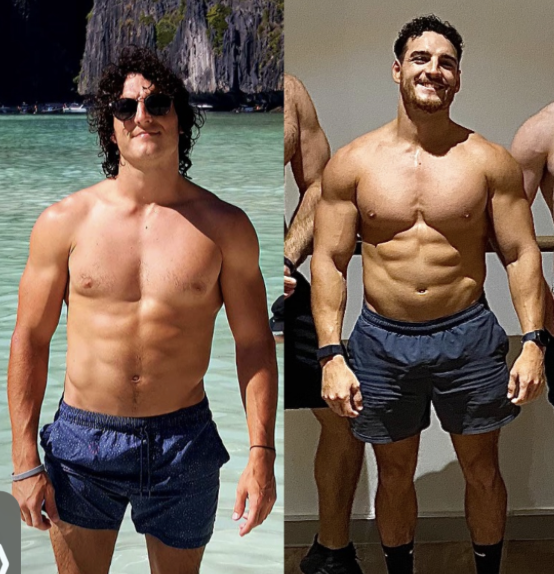
Matty Gonz
70kg → 82kg lean
"Without Pat I could not have made it as far as I did."
Matty Gonz
Pro Rugby — Aussie 7s, Olympics
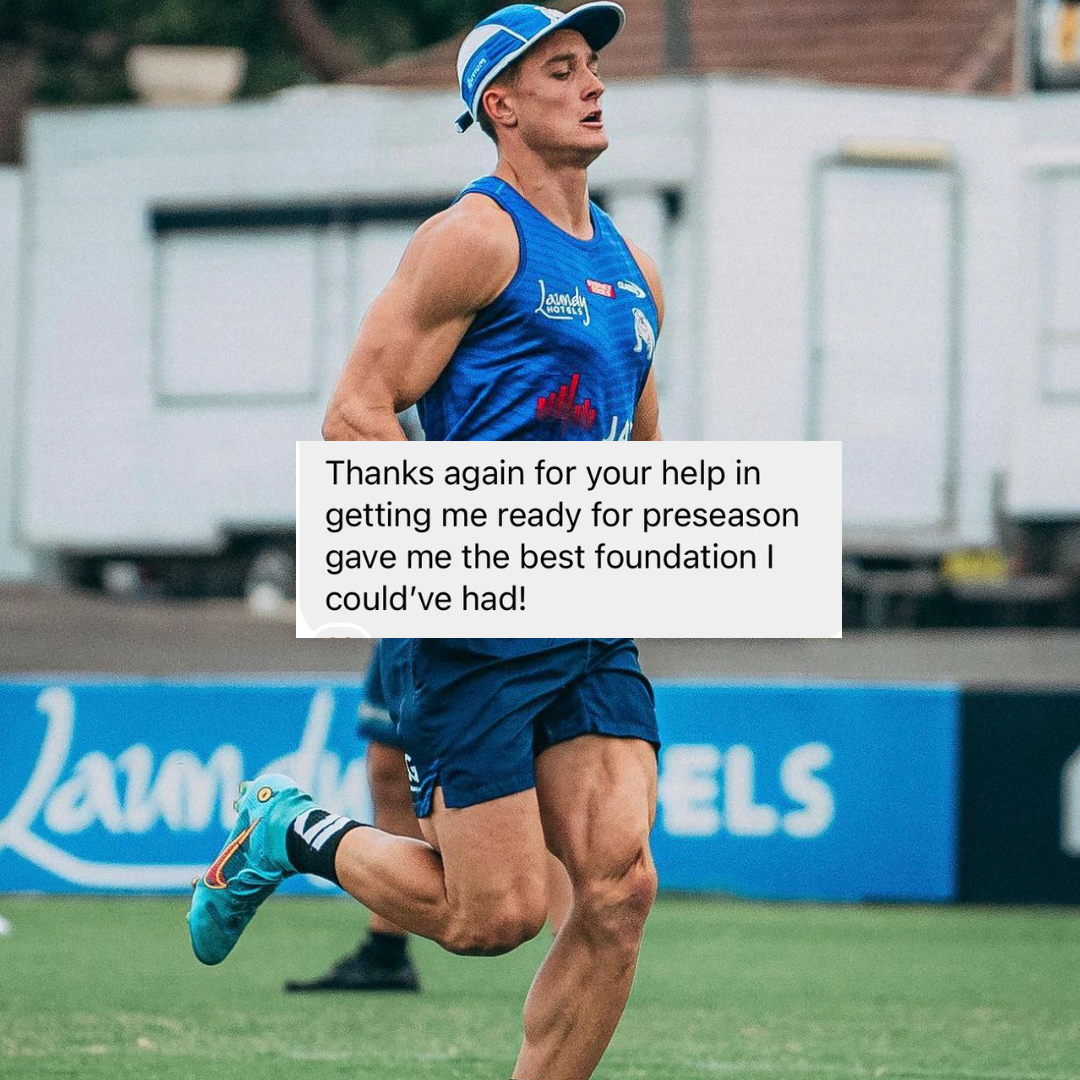
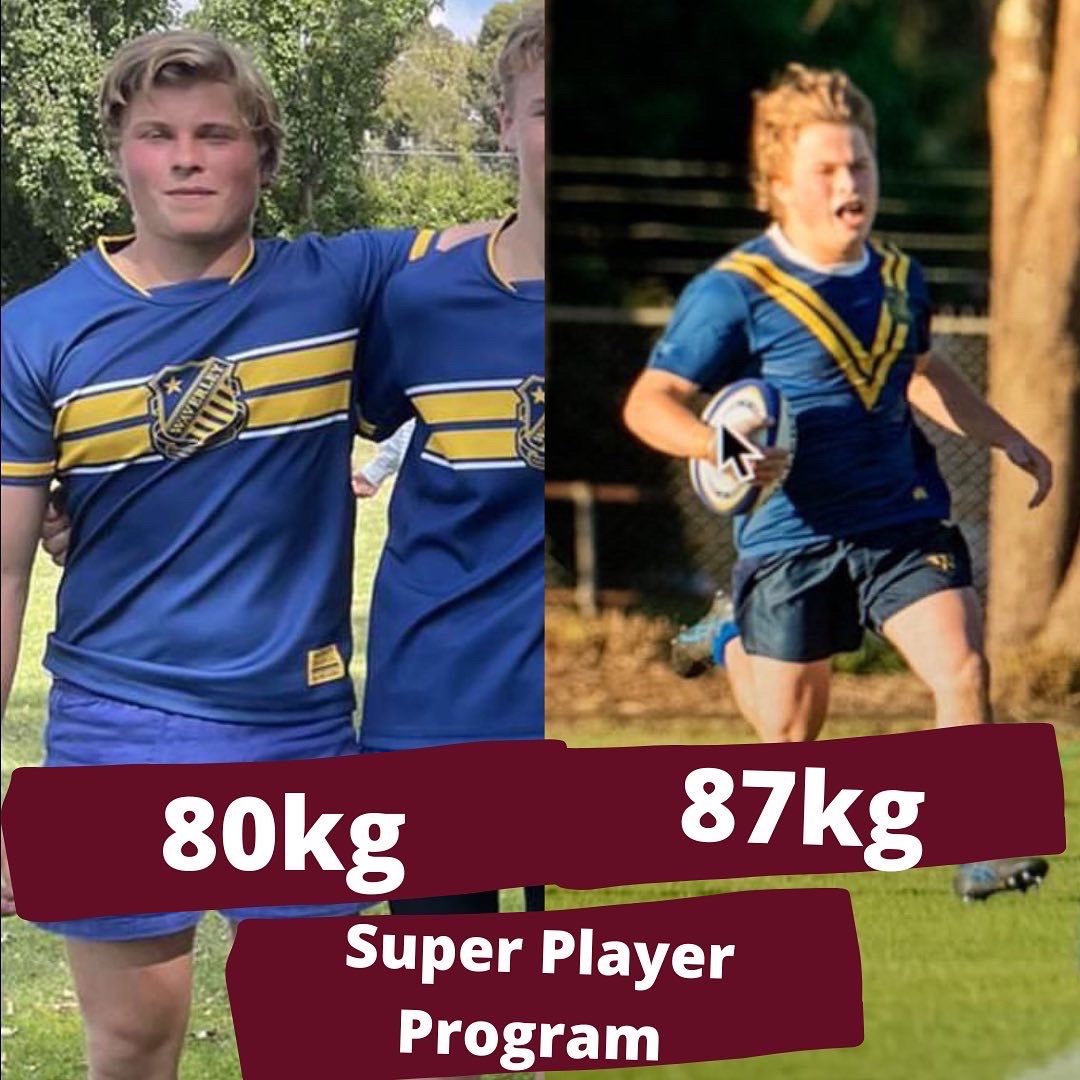
Charlie
80kg → 87kg, made 1st XV
"The program got me bigger, faster and stronger at the same time."
Charlie
Super Player Program
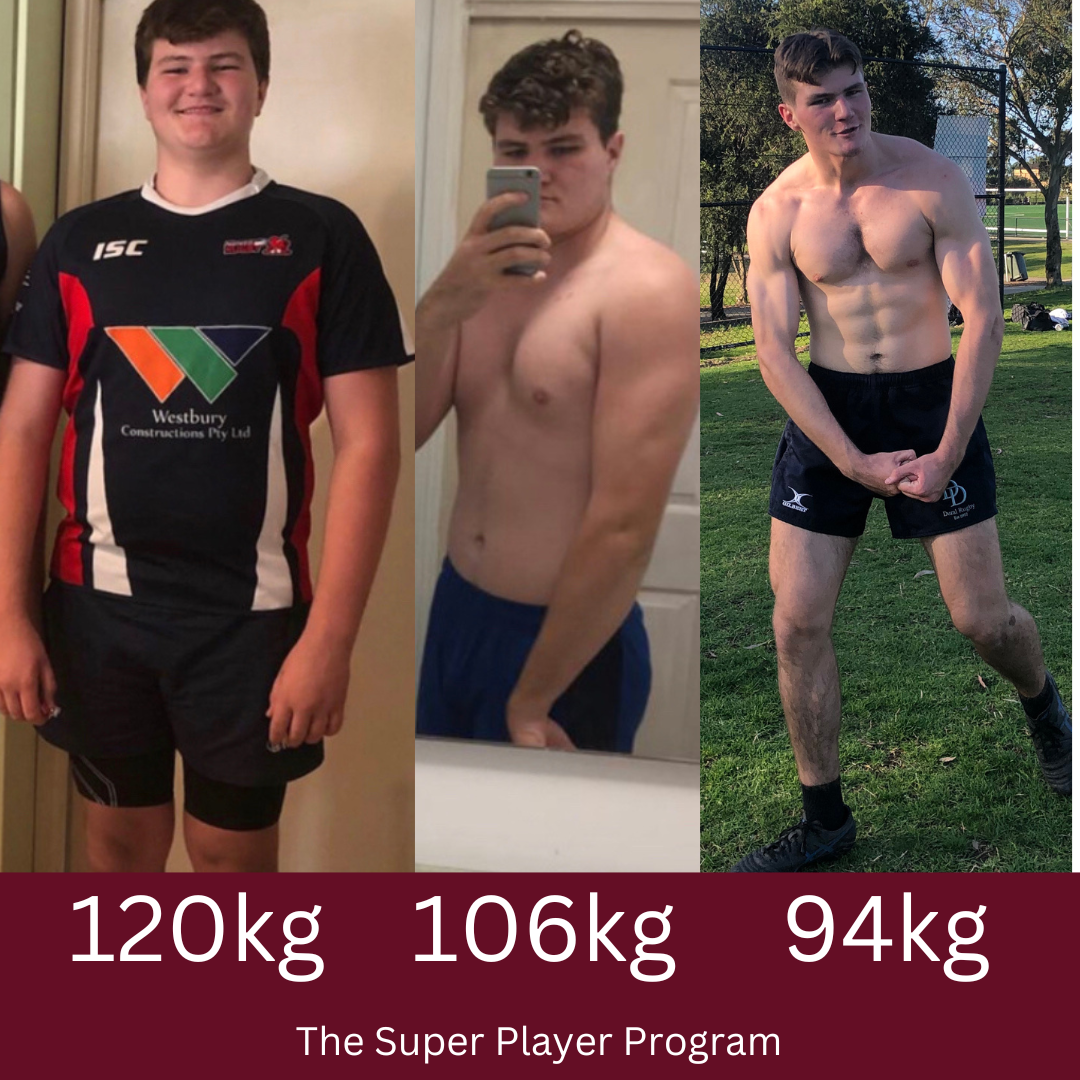
Ryan M
120kg → 90kg, lost 30kg
"Every rep has a meaning. My confidence has sky-rocketed."
Ryan M
Super Player Program
James Vorster
75kg → 93kg, dominated contact
"The results were incredible considering how little volume we actually did."
James Vorster
Maximum Muscle Program — Lock
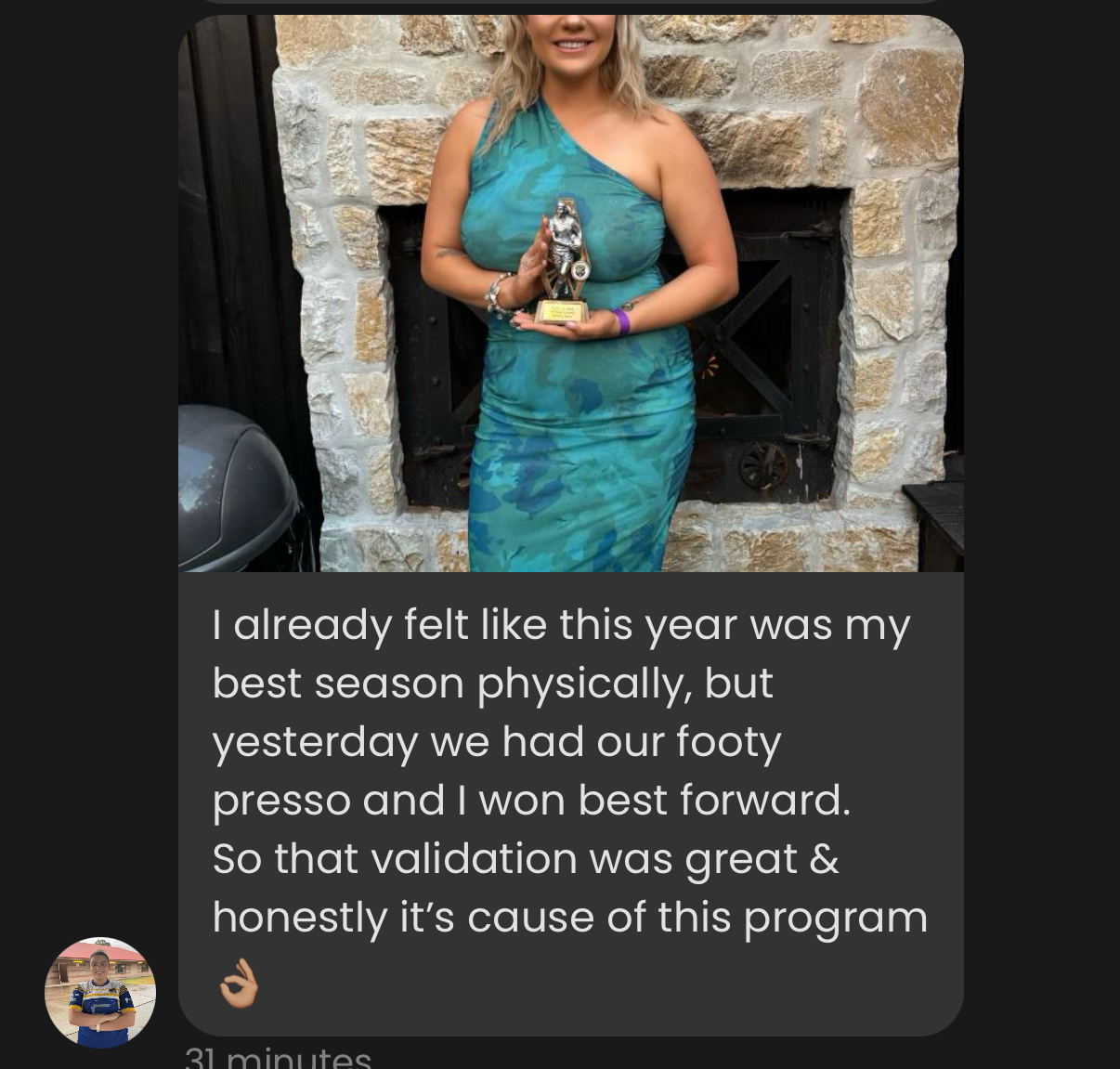
Brit
Lost 30kg, won Best Forward
"I cannot believe how much better I am playing."
Brit
RDC Women's Program
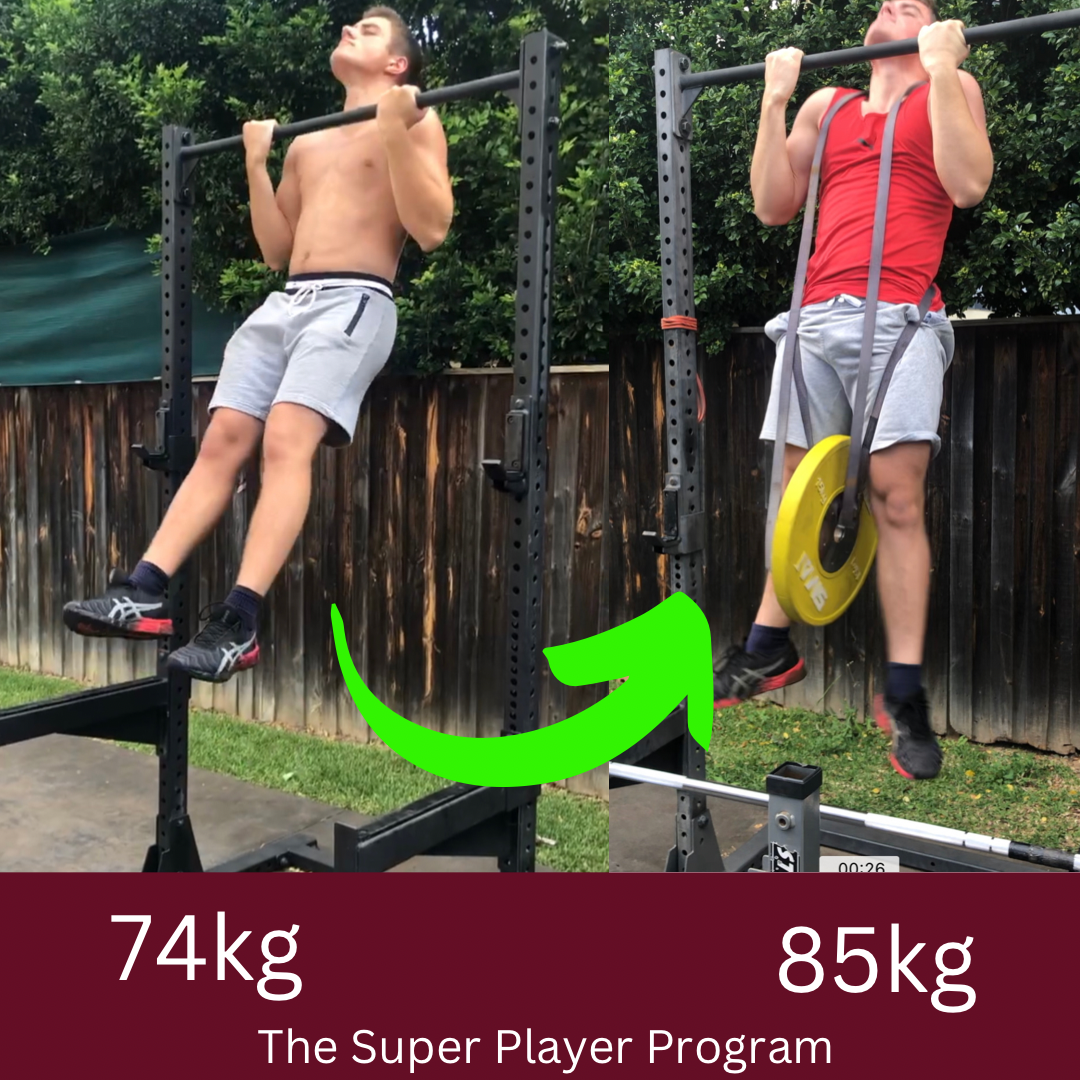
Zeke Farrow
74kg → 85kg, 60kg → 150kg squat
"Everyone he versed said he was like running into a brick wall."
Zeke Farrow
Super Player Program — Age 17

A Program Built Around You.
Not a Template.

Pat builds your program around your position, training age, schedule, available equipment and where you are in the season. Every month it evolves with you.

Daily coach support. Video feedback. Ongoing progression. Nothing stays static.

$650
AUD / 3 months
$250
AUD / month

No lock-in. Cancel anytime. Full year option discussed on your call with Pat.

Training & Game Day

Pre-Workout &
Game Day Fuel

Pat's real food strategies around training and game day. Simple, effective, no complicated supplements required.

Pomegranate Juice
30–60 min before

250–300ml before training or a game. Rich in nitrates that convert to nitric oxide — improving blood flow, oxygen delivery, and endurance.

Game Day Carb Protocol
Game Day

Timing your carbs on game day for maximum energy output — what to eat, when to eat it, and how much.

🔒
Members Only
Pat's real food strategies around training and game day — pre-workout timing, game day carb protocols and what Pat's top athletes eat before competing.
Unlock with Membership

Already a member? Access via your membership portal.

Digest Better, Perform Better

Gut Health Guide

You are what you eat — and what you can absorb. A healthy gut means better protein uptake, more energy, sharper brain, and faster recovery.

Pat's rule: If your gut isn't working, nothing else works. Fix this before worrying about supplements.
🍎
Apple Cider Vinegar Before High-Protein Meals

1 shot before every meal — improves stomach acidity and protein absorption.

🦴
Bone Broth Daily

Rich in glycine, collagen and amino acids that repair and seal the gut lining.

🔒
Members Only
Pat's full gut health system — ACV protocols, bone broth guide, healing foods and the exact protocol used by RDC members for optimal absorption.
Unlock with Membership

Already a member? Access via your membership portal.

Key for Performance

Hydration & Electrolytes

Most athletes are chronically under-hydrated at a cellular level. This is one of the biggest performance levers you have — and it costs almost nothing.

Hydration isn't just water. You need electrolytes — especially potassium, magnesium and sodium — for muscles to contract, nerves to fire, and your brain to stay sharp. A 2% drop in hydration causes a measurable drop in performance. Potassium is the one most athletes are deficient in. You need 3,500–4,700mg per day as an active athlete — that's hard from food alone.
🥥
Coconut Water
Pat's hydration base for training and game day. Natural electrolytes — potassium, magnesium, sodium. No artificial anything. Cocobella or H2Coco in Australia.
~600mg potassium / 250ml
🍷
Pomegranate Juice
High in potassium AND nitrates for blood flow and testosterone. Best pre-training and pre-game drink. Pair with honey for a glucose hit.
~530mg potassium / 250ml
🍉
Watermelon Juice
Naturally high in L-citrulline — converts to nitric oxide for blood flow and endurance. The whole food version of citrulline malate powder. Blend fresh, 500ml pre-training. Cheap in Aussie summer.
~250mg citrulline / 500ml
🍊
OJ & Honey
High potassium plus fast-acting glucose from honey. During sessions or halftime. Freshly squeezed OJ where possible — not from a carton.
~500mg potassium / 250ml
💧
Mineral Water
Choose brands high in magnesium and calcium — San Pellegrino, Evian, Gerolsteiner. Better than tap for daily use.
Check the label for Mg
🧂
Redmond Real Salt
Add to water, meals, or take straight. A pinch before bed retains minerals overnight and supports adrenal function. Don't use table salt.
Natural trace minerals
Electrolyte Supplement
Choose high in magnesium and potassium — not just sodium. LMNT, Nuun, Precision Hydration are solid options. Use on training days.
Check for Mg + K content

On Waking
Morning

500ml water with a pinch of Redmond Real Salt and a squeeze of lemon. Rehydrates after overnight fast, kickstarts digestion, primes adrenals. Do this before coffee.

Pre-Training (60 min before)
Pre-Session

Choose one: 250ml pomegranate juice + honey, 500ml watermelon juice, or coconut water with electrolytes. All give nitrates for blood flow and natural carbs for energy. Don't train dehydrated — performance drops immediately.

During Training / Game
Ongoing

Sip 150–200ml every 15–20 min. For sessions over 60 min, add electrolytes or coconut water. OJ and honey gives fuel and fluids together.

Post-Training (30 min)
Recovery

500–750ml water or coconut water with electrolytes. Protein and carb absorption post-training is dramatically better when you're hydrated.


Watch for these in yourself and your players:

• Dark yellow urine (aim for pale yellow throughout the day)
• Muscle cramps during or after training
• Headaches, especially afternoon
• Brain fog or slow decision-making on field
• Feeling flat despite good sleep and nutrition
• Taking longer than normal to recover between sessions

Quick check: Weigh yourself before and after training. Every 1kg lost ≈ 1 litre of fluid. Drink 1.5× that amount to fully rehydrate.
🔒
Members Only
Pat's full hydration protocol — daily targets, electrolyte timing, game day hydration and the exact drinks used by RDC members to stay sharp all game.
Unlock with Membership

Already a member? Access via your membership portal.

RDC Protocol

Supplement Guide

Get your food and hydration right first — that's 90% of it. These are what Pat uses and recommends, in priority order. None of it is mandatory.

How to use this guide: Start with the Foundation stack. Add others based on your specific needs.

Foundation — Start Here

Creatine Monohydrate
5g / day

One of the most researched supplements. Increases strength, power output and muscle hydration.

Electrolytes
Daily

High in magnesium and potassium — not just sodium. LMNT, Nuun or Precision Hydration.

🔒
Members Only
Pat's complete supplement stack — performance, sleep, brain health, testosterone and recovery. Every product and exact dose.
Unlock with Membership

Already a member? Access via your membership portal.

RDC Meal Swaps

Not feeling that meal?
Swap it out.

Pick the meal you don't want, set any restrictions, and get 3 alternatives that match the same macros.

🍖 Slow Cook tab: All bone-in slow cook recipes are listed under the Slow Cook filter. These are Pat's best value meal prep options — cheap cuts, collagen from the bone, and you get 4–6 serves from one cook.
All Breakfast Lunch Dinner Snack 🍖 Slow Cook
No Red Meat No Dairy No Eggs Quick Prep Only Budget Friendly High Calorie

Your Alternatives

3 Options
Finding your swaps...
Know Your Fuel

Nutrition Education

Understanding what you're eating and why is what separates players who get results from ones who just follow a plan blindly. Pat's guide — plain language, no BS.

Start Here

There are three macronutrients — protein, carbohydrates, and fats. Every food you eat is made up of some combination of these three. Understanding what each one does and when to eat it is the foundation of everything in this program. Get this right and the rest falls into place.

🥩
Protein
Builds and repairs muscle, bone, organs and blood cells. Your body's building material.
🍚
Carbohydrates
Your fastest energy source. Fuels high-intensity training and replenishes muscle glycogen.
🥑
Fats
Brain function, hormones, slow-burning energy, and absorbing fat-soluble vitamins A, D, E and K.
🥩
What Protein Actually Does
The most important macronutrient for athletes

Protein gets broken down into amino acids — and amino acids are the building blocks your body uses to repair everything. Muscle fibres torn during training, bone density, organs, blood cells, hair, skin. Everything. If you're not getting enough protein, recovery suffers, muscle growth stalls, and you'll constantly feel beat up.

RDC target: 1.6–2g of protein per kg of bodyweight per day. For an 85kg player that's 136–170g. Most people eating a normal diet get half that.

Not all protein is equal. Animal-based proteins — red meat, eggs, fish, dairy — are complete proteins. They contain all nine essential amino acids and are highly bioavailable, meaning your body actually absorbs and uses most of what you eat. Plant-based proteins are incomplete and significantly less bioavailable. You'd need to eat considerably more to get the same effect, which often causes gut issues.

Pat's rule: Build every single meal around a quality protein source first. Then add carbs and fats around it. Never the other way around.

Best RDC sources: Rump steak, beef mince, chicken thighs, salmon, eggs, sardines, lamb, slow cooked bone-in cuts, Greek yoghurt, grass-fed whey.

Why you stay hungry: Research and practical experience both show the same thing — you'll keep being hungry until you've hit your protein target for the day. If you're always hungry, you're almost always under-eating protein, not calories.

🍚
What Carbs Do and When to Eat Them
Your fastest fuel source — use them strategically

Carbohydrates break down into glucose — your body and brain's preferred fast fuel. During high-intensity rugby training, your muscles run almost entirely on glycogen (stored glucose). When glycogen runs low, performance drops hard — you feel flat, your legs go heavy, your brain slows down. This is the fatigue mechanism most players hit in the second half.

The key insight: Carbs before training delay the onset of this fatigue mechanism. Having carbs 1–2 hours before training tops up your muscle glycogen stores so you have a full tank going in. Players who train on empty are running on fumes from the first whistle.

Not all carbs are the same. The glycaemic index (GI) tells you how fast a carb raises blood sugar. High GI foods raise it fast — good for immediately before or during training. Low-to-moderate GI foods raise it slowly — better for meals a few hours before.

  • Before training (2–3hrs): White rice, sweet potato, oats — moderate GI, sustained energy
  • Before training (30–60min): Banana, honey, OJ, dates — high GI, fast fuel
  • During training / game: OJ and honey, watermelon juice — immediate glucose
  • After training: White rice, sweet potato, sourdough — replenish glycogen fast
  • Rest days / low activity: Keep carbs lower — you don't need the fuel, excess gets stored as fat
Why white rice? White rice is easy to digest, easy to cook in bulk, cheap, and almost pure starch. It doesn't irritate the gut the way some wholegrains can. For high-volume athletes, it's one of the best carb sources available. Pat uses it constantly.

Carbs and the brain: Your brain runs on glucose too. Mental fatigue, slow decisions, and poor concentration late in a game are often a sign your blood glucose has dropped — not just your legs. This is why having carbs during a game (OJ and honey at halftime) improves on-field decision-making, not just physical output.

⏱️
When to Eat Carbs for Maximum Performance
Timing carbs around training changes everything

The timing of your carbohydrates matters as much as the amount. Here's how Pat structures it:

Night Before
Higher carb dinner — white rice, sweet potato. Top up glycogen for tomorrow.
2–3 hrs Before
Moderate carb meal — rice + protein. Slow burn, full tank going in.
30–60 min Before
Fast carbs if needed — banana, honey, pomegranate juice. Quick top up.
Post-Training
Carbs + protein within 30 min. Replenish glycogen while the window is open.
The fatigue mechanism: When muscle glycogen depletes during intense exercise, your body starts breaking down muscle protein for fuel (gluconeogenesis) and your power output drops sharply. This is what "hitting the wall" feels like. Carbs before training delay this significantly — you can train harder for longer before it kicks in.

Rest days: On days you're not training, your carb needs drop significantly. You don't need to replenish glycogen you haven't used. Keep carbs lower on rest days — focus on protein and fats — and your body composition will improve faster than players eating the same amount every day.

🥑
Why You Need Quality Fats
Your hormones, brain and joints depend on this

Fat got a terrible reputation for decades and it was wrong. Your brain is roughly 60% fat. Your testosterone and other hormones are made from cholesterol — a fat. Fat-soluble vitamins A, D, E and K can only be absorbed when fat is present. Low fat diets produce low testosterone, poor brain function, and compromised immunity.

The real enemy isn't fat — it's the wrong type of fat. Seed oils (canola, sunflower, soybean, vegetable oil) are highly processed, oxidise at cooking temperatures, and your body doesn't produce enzymes to digest them properly. These drive inflammation. Grass-fed animal fats, butter, ghee, coconut oil, olive oil, avocado, and fatty fish are what your body is designed to run on.

Fat as fuel: Fat is your slow-burning energy source. It needs oxygen to be broken down, so it's not great for explosive sprint efforts — but it's excellent for longer, lower-intensity work. Athletes who eat quality fats and have periods of lower carbohydrate intake become better at using fat as fuel, which preserves glycogen for when you really need it.

  • Grass-fed butter / ghee — cooking fat, fat-soluble vitamins
  • Avocado — monounsaturated fats, potassium
  • Fatty fish (salmon, sardines, mackerel) — omega-3s, DHA for brain
  • Eggs (whole, never just whites) — cholesterol for hormones, choline for brain
  • Bone-in meat cuts — marrow fat packed with fat-soluble vitamins
  • Coconut oil — medium-chain triglycerides, fast-burning fat energy
Pat's rule: Never throw away the fat on your steak or the skin on your chicken. That's where the vitamins and flavour are. Eating fat-free animal products is throwing away the best part.
🔥
Losing Fat Without Losing Muscle
The approach that works for rugby athletes

Fat loss comes down to being in a calorie deficit — burning more than you eat. But how you create that deficit matters enormously, especially for athletes who need to keep their muscle, strength, and performance while losing fat.

The biggest mistake: Eating the same low amount every day regardless of training. This tanks your performance, muscle mass, and testosterone. A much smarter approach is to cycle your intake around training.

🛋️ Rest Days — Bigger Deficit
Lower carbs, lower total calories. Your body doesn't need the fuel so you create a real deficit. Focus on protein and quality fats. Keep carbs to vegetables and small amounts of fruit only.
🏋️ Training Days — Eat More
Bring carbs back in — especially before and after training. Eat closer to maintenance or a small deficit only. This fuels performance, preserves muscle, and keeps your metabolism from adapting.
Why this works: On rest days your insulin sensitivity is lower and carbs are more likely to be stored as fat. On training days insulin sensitivity is high — carbs get shuttled into muscle cells as glycogen, not fat. You're eating more on the days your body can use it, and less on the days it can't.

The leaning out threshold: If your body fat is above 15%, Pat's recommendation is to lean out first before focusing on building muscle. Here's why — when you're carrying excess body fat, insulin sensitivity is reduced. That means even when you eat carbs and protein, your body doesn't deliver them to muscle cells as efficiently. Get lean first, and everything else — muscle gain, performance, energy — improves automatically.

Practical fat loss checklist:
  • Hit your protein target every day — 1.6–2g per kg. This preserves muscle while in a deficit.
  • Eat carbs before training — don't cut carbs before sessions, it kills performance and muscle retention.
  • Cut carbs on rest days — focus on protein, fats, and vegetables instead.
  • Don't skip meals — being too hungry leads to poor food choices. Eat structured meals.
  • Prioritise sleep — poor sleep raises cortisol, which drives fat storage and muscle breakdown. Non-negotiable.
  • ACV before high-protein meals — improves digestion and nutrient absorption. Better absorption = better body composition.
  • Stay hydrated — dehydration is often mistaken for hunger. Drink water and electrolytes consistently.
  • Avoid seed oils and processed food — these drive inflammation which makes fat loss harder and recovery worse.
  • Be consistent over perfect — one bad meal doesn't matter. A week of bad eating does. Build habits, not streaks.
💪
How to Build Mass for Rugby
Size in the right places changes the game

If contact is your game — harder to move at the breakdown, more powerful in the maul, harder to knock off the ball — then putting on size is a legitimate goal. And here's the honest truth: putting on size means you will put on some fat alongside muscle. That's completely okay for rugby.

That extra weight — even if it's not all lean muscle — still adds to your contact power. A bigger frame absorbs hits better, drives harder, and is more difficult to shift. You don't need to be a bodybuilder with 8% body fat to be effective in contact. You need to be strong, physical, and heavy enough to impose yourself. The size itself has value in this sport.

The key point: Putting on size does not mean you have to lose speed — if you keep your sprint work in. The mistake players make is they bulk up, stop doing speed sessions, and wonder why they feel slow. Keep your sprint work consistent through a mass phase and the extra size becomes an advantage, not a handicap. A bigger player with the same speed is a better rugby player. Full stop.

Accept the fat gain — then manage it: When you're in a meaningful calorie surplus, your body stores some fat alongside muscle. That's normal physiology. The fat you put on during a mass phase isn't wasted — it's part of the process. Once you've built the size and strength you're after, you can lean out and reveal the work underneath. Trying to gain mass without any fat gain is a losing battle that keeps most players permanently small.

Priority order for a mass phase: More food first. Structured gym program second. Sprint work to maintain speed third. In that order. You cannot build mass in a calorie deficit — it's physiologically impossible. Sort your nutrition before worrying about anything else.

What "eating more" actually means: Most players think they're eating a lot and they're not. Track your food for a week and you'll find you're usually 500–800 calories under what you think. A genuine mass phase means 300–500 calories above your maintenance, consistently, for months. Not just on days you feel hungry.

The gym plan: Size without a structured progressive overload program is mostly fat gain. You need to be getting stronger over time — squat, deadlift, bench, row, carry. If your lifts aren't progressing month to month, the stimulus for muscle growth isn't there. Find a program with a good coach behind it and stick to it.

Keep your speed sessions: 1–2 sprint sessions per week through your mass phase is non-negotiable. Short, sharp — acceleration work, not long runs. This maintains fast-twitch muscle fibre, keeps your rugby fitness, and ensures the size you're adding makes you a better player rather than just a heavier one.

The hardest part of building mass is hitting your calorie target when your appetite isn't there. These snacks make it easier:

  • Full cream milk and honey — 300ml milk + 2 tbsp honey. ~350 calories, barely any effort. Do this twice a day and you've added 700 calories.
  • Full cream milk and maple syrup — same as above, different flavour. Real maple syrup only.
  • Medjool dates and almond butter — 3 dates stuffed with almond butter. Dense calories, great before training.
  • Greek yoghurt, honey and oats — mix full fat Greek yoghurt with raw oats and honey. High protein, high calorie, easy to make in a big batch.
  • Banana and nut butter — banana with 2 tbsp almond or cashew butter. ~350 calories, portable.
  • Avocado and sourdough — 2 slices organic sourdough, whole avocado, salt. Clean, easy, calorie dense.
  • Whole eggs scrambled in butter — 4 eggs in grass-fed butter. ~350 calories, packed with protein and fat-soluble vitamins.
  • Bone broth with butter — add a tablespoon of grass-fed butter to your bone broth. Adds healthy fats and calories without bloating.
  • Rice with butter and salt — a big bowl of white rice with a knob of grass-fed butter. Cheap, easy, effective. Add it to any meal to increase the carb and calorie count.
Pat's mass tip: Don't complicate it. Eat your meals, add a snack or two from the list above, sleep 8 hours, train hard, and repeat for 3–6 months. Mass is built over time — not in a week.
📈
How to Build Lean Muscle Without Getting Fat
Patience and precision over rushing the process

Gaining lean muscle — muscle without significant fat gain — is the slowest approach. But for players who want to stay lean and athletic while gradually getting stronger and more muscular, it's the right approach. This isn't a shortcut. It's about being consistent over a long time.

The honest reality — and this matters: How much lean muscle you can gain depends almost entirely on your training history. A complete beginner can gain meaningful muscle relatively quickly in their first 1–2 years. Someone who has been training seriously for 5, 10, or 20 years is a completely different story. Your body adapts — the longer you've been training, the harder it becomes to add new muscle, and the slower it happens. That's not a failure. That's just biology.

A lifetime natural athlete — eating well, training hard, no performance enhancing drugs — will gain somewhere between 10–20kg of total muscle over their entire lifting career, depending heavily on genetics. That's their ceiling. And most of that comes in the first few years. After a decade of serious training, gaining 1–2kg of actual lean muscle in a year is a genuinely good result. Anyone telling you otherwise is either selling you something or on gear.

What this means practically: If you're new to training, be patient but know that progress will come relatively quickly if you do the work. If you've been training for years, don't chase the numbers a beginner gets. Your goal is to keep getting incrementally stronger, stay lean, and build the body composition that makes you the best rugby player you can be — not to match what an 18-year-old just starting out can do.

Consistency of quality training matters most. This is the one thing that separates players who build real muscle over time from those who stay the same year after year. Not the program, not the supplements, not the perfect meal plan — consistent, quality training over a long period of time. You can eat perfectly and go nowhere without it. Miss sessions regularly, change programs every 6 weeks, or train without real intent and no amount of nutrition will save you.

What quality training actually means: Turning up is the baseline — not the achievement. Quality means training with purpose. Progressive overload — consistently adding weight, reps, or difficulty over time. If your lifts haven't moved in months, the stimulus for growth isn't there regardless of what you eat. A well-structured program followed with genuine effort for 6–12 months will always beat the player who jumps between the latest programs looking for the magic fix.

The nutrition approach: Lean muscle gain requires a small calorie surplus — roughly 150–250 calories above your maintenance. Not 500. Not 1000. Small and consistent. You're giving your body just enough extra fuel to support muscle growth without storing the excess as fat. But this only works if the training stimulus is there to begin with.

  • Gradually increase calories as you gain muscle — your maintenance rises as you get bigger, so intake needs to rise with it
  • Hit your protein target every day — 1.8–2g per kg bodyweight. Non-negotiable
  • Time carbs around training — before and after sessions, lower on rest days
  • Track your weight weekly — for an experienced lifter, gaining 0.5–1kg over a month is solid progress. Don't expect more than that
  • If fat is creeping up — reduce calories on non-training days. Keep training day intake the same. Simplest lever to pull
  • Consistency with food matters more than training — Pat has been training for 20 years. The difference between good and great results comes down to what you eat, day in day out, not just how hard you train
The right mindset: Stop measuring in weeks. Measure in years. An experienced athlete who adds 1–2kg of genuine lean muscle per year, stays lean, and keeps getting stronger is doing exceptionally well. That compounds. Be honest about where you're starting from and build from there.

Signs the approach is working: Strength going up in the gym over time. Bodyweight increasing slowly. Energy stable. Performance on the field maintained or improving. Body fat staying in check. If all of these are moving in the right direction — don't change anything.

🫃
You Are What You Absorb
Eating well isn't enough if your gut can't absorb it

Most people focus entirely on what they eat and almost never on whether they're actually absorbing it. Pat's view: you are what you eat AND what you absorb. A compromised gut means compromised results regardless of how good your food is.

  • ACV before high-protein meals — increases stomach acid, which is what breaks down protein into amino acids. Low stomach acid = poor protein absorption = poor recovery.
  • Keep food simple — the more variety and complexity in a meal, the harder the gut has to work. Meat, rice, vegetables, water is easier on your digestion than a complex mixed dish.
  • Bone broth daily — the glycine and glutamine in bone broth heal and maintain your gut lining. A healthy gut lining absorbs nutrients properly.
  • Avoid seed oils — your body doesn't produce enzymes to break them down efficiently. They cause inflammation in the gut wall and compromise absorption.
  • Don't overdo fibre — especially on training days. High fibre foods slow digestion. Save them for rest days or evenings.
Signs your absorption is compromised: Bloating after meals, brain fog after eating, always hungry despite eating enough, poor recovery despite good training. If you tick two or more of these — fix your gut before adding supplements.
How Hormones Drive Body Composition
Get these right and results come faster

Calories in vs calories out is real — but it's not the whole picture. Your hormones determine how your body partitions the food you eat. Are those calories going to muscle or fat? Are you recovering or breaking down? Hormones make that call.

  • Insulin — released when you eat carbs. On training days it shuttles nutrients into muscle. On rest days excess insulin promotes fat storage. This is why carb timing matters.
  • Testosterone — your primary muscle-building and fat-burning hormone. Supported by dietary fat (especially saturated and monounsaturated), zinc, boron, quality sleep, and reduced stress. Crushed by seed oils, low fat diets, poor sleep, and chronic stress.
  • Cortisol — your stress hormone. Short-term it's useful for performance. Chronically elevated (from poor sleep, overtraining, under-eating) it breaks down muscle and stores fat, particularly around the abdomen.
  • Growth Hormone — released primarily during deep sleep and fasting. This is why quality sleep and not eating late are powerful fat loss and recovery tools.
The simple hormone protocol: Eat quality fats and protein, time carbs around training, sleep 7–9 hours, manage stress, avoid seed oils and processed food. You don't need hormone-boosting supplements if you do the basics right.
⚠️
The Most Common Nutrition Mistakes in Rugby Players
Fix these first before anything else
  • Not enough protein. The single most common issue. Players eating 80g when they need 160g wonder why they're not recovering or growing. Hit your target every day, non-negotiable.
  • Eating junk to gain weight. Putting on fat, getting inflamed, ruining gut health, becoming slower and more injury-prone. This is not bulking — this is just getting fat. Gain weight with quality food.
  • Training on empty. No fuel going in means poor performance, higher injury risk, and more muscle breakdown. Always have something before training.
  • Same calories every day regardless of training. See the fat loss section. Cycle your intake. Eat more when you train, less when you rest.
  • Relying on supplements before fixing food. Supplements are the 10%. A creatine supplement doesn't fix a bad diet. Nail your food first — then add supplements to enhance an already solid base.
  • Chronic dehydration. Most athletes are operating at 1–2% dehydration without realising it. That's enough to measurably reduce strength, endurance, and decision-making. Drink more, add electrolytes.
  • Seed oils everywhere. Deep-fried food, most takeaway, most packaged food, most sauces and dressings. These drive inflammation, compromise gut health, and make recovery harder. Cook with butter, ghee, or coconut oil. Read labels.
  • Poor sleep. Nutrition can't outrun chronic sleep deprivation. Muscle breakdown increases, fat storage increases, performance drops. Sleep is a non-negotiable part of the program.
Pat's bottom line: Most players don't have a supplement problem or a complicated nutritional deficiency. They have a protein problem, a hydration problem, a sleep problem, or they're eating too much processed food. Fix the basics first and the results will follow.
🔒
Members Only
Pat's full nutrition education guide — macros explained, meal timing, gut health foundations, and how to actually apply it all to your rugby season.
Unlock with Membership

Already a member? Access via your membership portal.